
Seeds of the future:
Ecological dreams rooted in past and present
With: Maria Alejandra Escalante , Arturo A. Massol-Deyá and Mela Chiponda

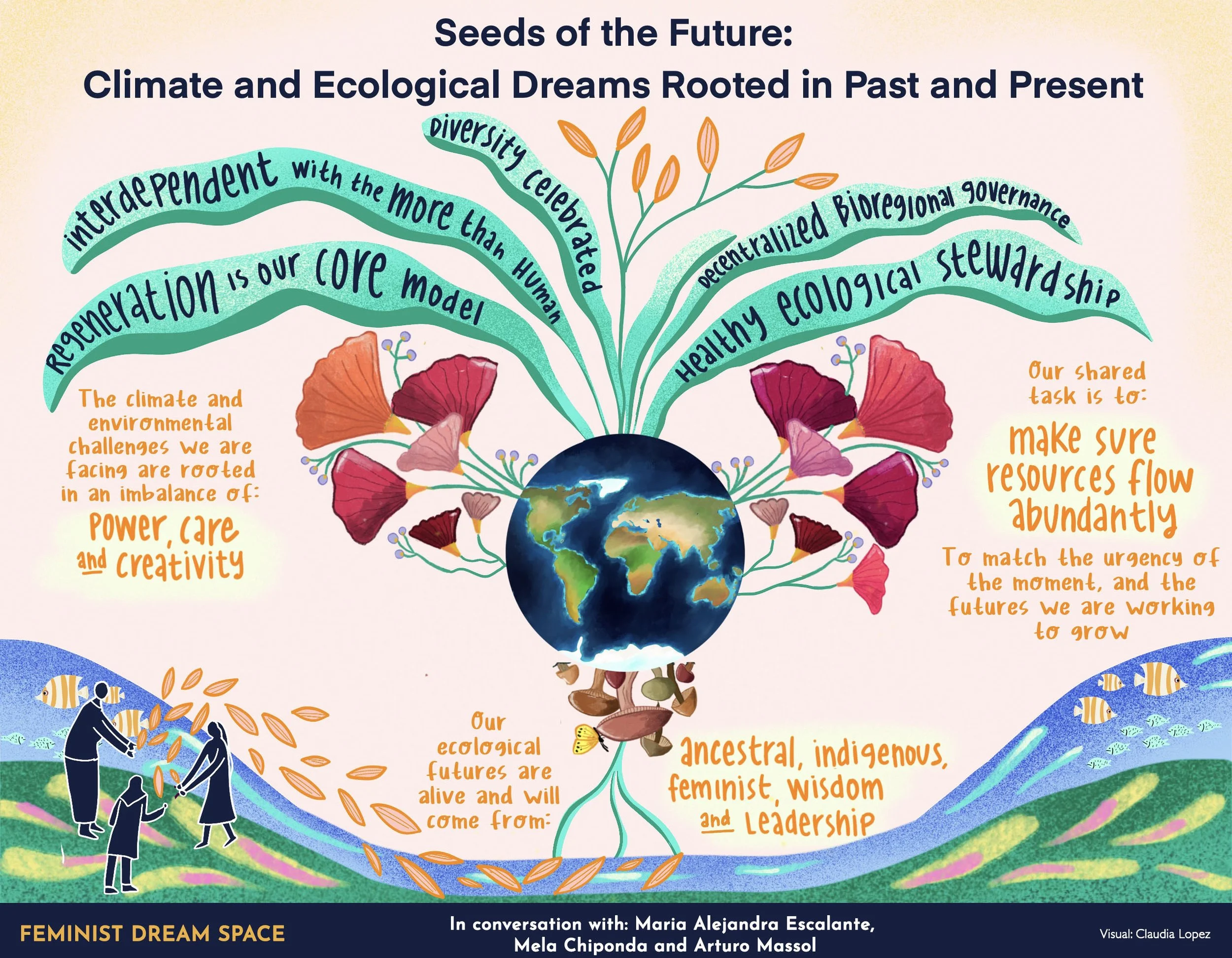
As feminists, land defenders and communities from the global majority we know that the climate and environmental challenges we are facing are rooted in imbalance of power, care, and creativity.
We also know that ecological transformation will not come from technical fixes or policy reform alone. It will come from reclaiming ancestral and Indigenous knowledge systems, from our ability to use our imaginative power, from how we relate to ourselves, the environment and to the more than human, and from the conviction that different futures are possible.
This powerful conversation with Maria Alejandra, Mela Chiponda from Shine Collab and Arturo Massol-Deyá from Casa Pueblo invited us to stretch “the muscle of future-making together” to revisit learnings from the past and to see how parts of this future are already alive in particular places as we learned from Mela and Arturo's work in communities in Africa and Puerto Rico.
Imagining 2076 - 50 years from now
Using the backcasting tool, one of the futures methodologies within our Feminist Futures toolkit, we were transported forward to the year 2076, where some of our dream seeds had taken root and grown. We then traced back the pathways that led us there.
In our visions of the future, by 2076:
Ecosystemic collapse has been halted
Climate grief is not buried as a historical event but honored as a living civic ritual for healing, and for connecting with nature.
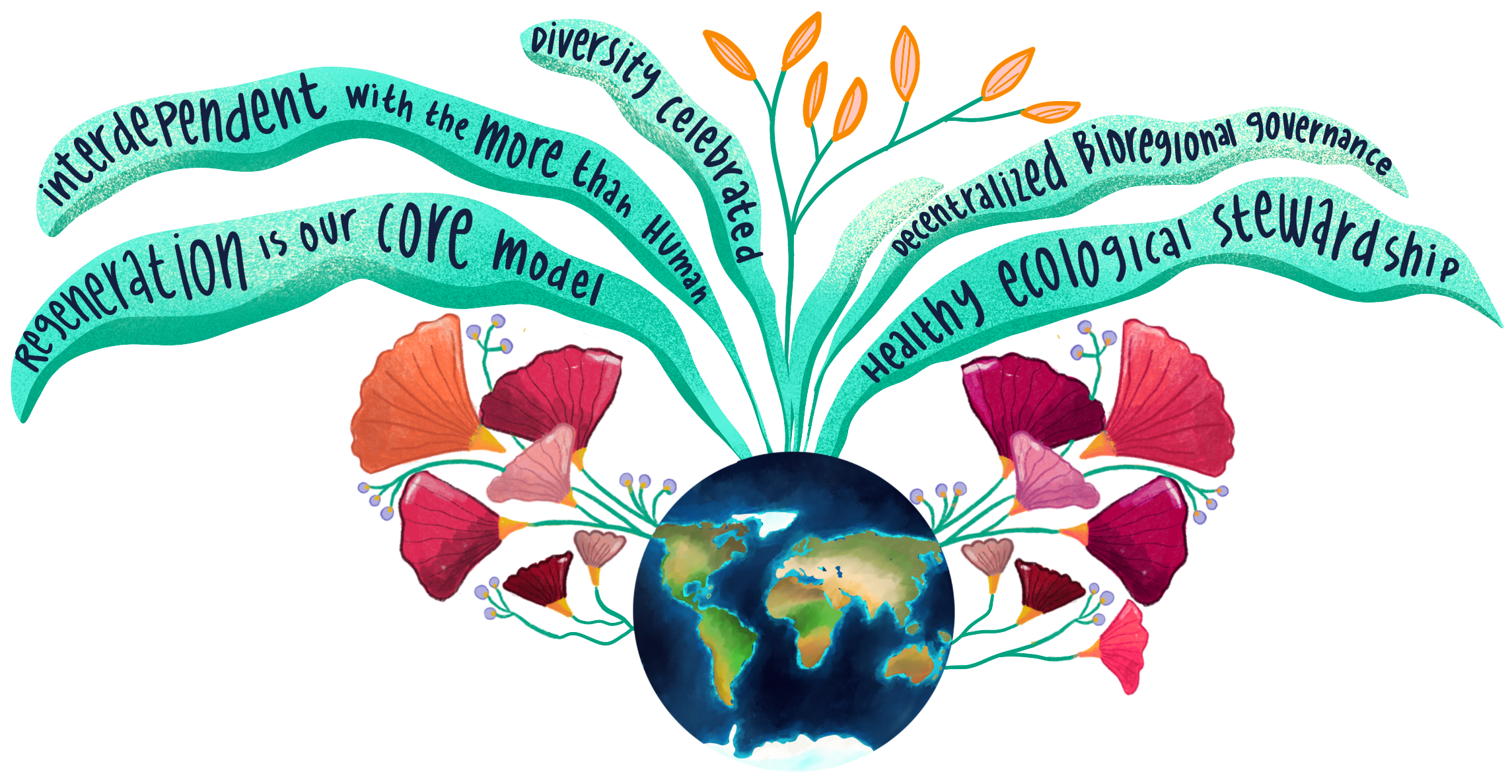
Regeneration is our core model.
Economies are built on mutual aid and communal care. Use of resources is limited by ecological renewal rates. Practices of giving, receiving, degeneration, and regeneration are held in dynamic balance.
We hold an interdependent relationship with the more-than-human world.
Nature is no longer viewed as a resource to exploit but an ecosystem of life to which we belong. The agency and rights of non-human beings is recognized. We know the language of the more than human.The source of our spirituality, governance and knowledge is grounded in nature.
Our ecological stewardship is healthy and grounded in indigenous knowledge, ancestral wisdom and cultural renewal.
Indigenous languages are thriving as is their sovereignty and self-determination. Our ecological futures are drawn from ancient wisdom and cultural practices.
Nation-state borders fade into decentralized, autonomous, bioregional governance.
Energy is decoupled from fossil fuels and runs on hyper-localized, community-owned microgrids shared across territories through open-source, peer-to-peer networks
Wealth is measured by systemic health and thriving ecosystems.
A politic of abundance is held and rooted in harmony. Economies are circular, localized and organized around care. Technology is repurposed in service of the well-being of people and the planet.
Diversity of life is celebrated.
Diversity of bodies, genders, and ways of life are co-inhabiting in balance rather than competition
At the heart of these visions is a profound shift in worldview towards interdependence and harmony where we understand ourselves as part of a larger web of life and not separate from it.
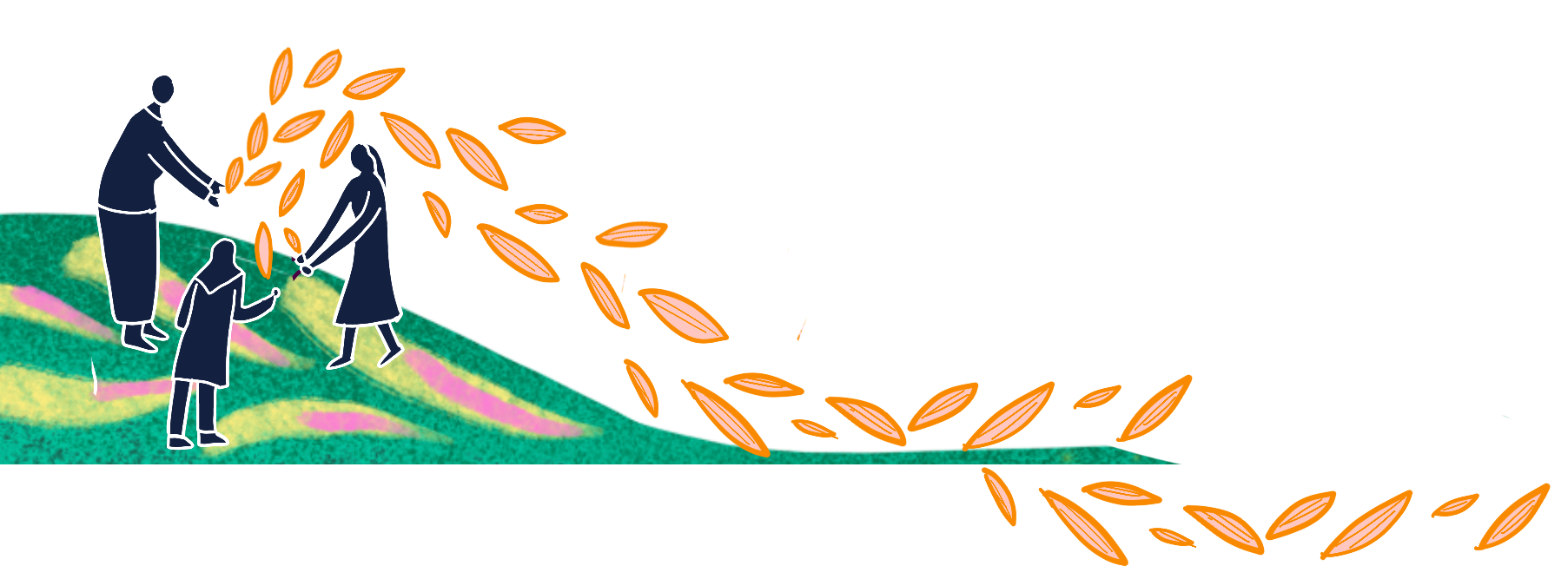
Tracing our way back. How did we get there?
Working backward from 2076, we imagined a series of profound shifts:
The rise of people's movements and the fall of oppressive regimes
A reclamation & resurgence of Indigenous and feminist wisdom & leadership is moving us towards different ways of governance, organizing and into regenerative relationships with economic systems.
The decline of extractive economic systems
The democratization of technology and community-serving models
New understandings of belonging beyond nation-state boundaries.

While none of this was linear or without disruption, we saw these transformations as interconnected steps towards a more just and generative one.
This exercise reminded us that many of the seeds we will need to plant now for this vision to become a reality in 2076 are already sprouting today. The future is not only ahead of us. It is already alive in particular communities and territories. Our responsibility is to protect these emerging possibilities, help them flourish, and continue planting new seeds for the futures we long for.
Sprouting seeds of today
Mela Chiponda, from Zimbabwe's Shine Collab, shared how the energy sector is overwhelmingly dominated by men and by infrastructures that pollute the environment. Her starting point was the belief that direct access to energy is an enabler of gender equality. And her answer was to “pilot the future now”, through decentralized renewable energy systems owned and managed by women. She described how women-led renewable energy initiatives are creating pathways to energy sovereignty, economic resilience, and climate justice. Through community-owned solar hubs in Zimbabwe and South Africa, women are building alternatives that challenge both extractive economies and gender inequality.
Arturo Massol, from Puerto Rico's Casa Pueblo, shared how a decades-long community movement evolved from resisting destructive development projects to building local alternatives. It began as a struggle to stop open-pit mining and has since taken on natural gas pipelines, the U.S. Navy presence in Vieques, and a long list of imposed “development.” plans. After defeating a mining project, Casa Pueblo made a defining shift: from protesting unsustainable proposals to proposing and building alternatives. Today, Casa Pueblo operates community-owned solar systems, educational programs, forests, and knowledge centers, demonstrating how energy, culture, science, and community can work together to create self-determined futures.
We invite you to learn more about Mela and Arturo's work at Shine Collab and Puerto Rico Casa Pueblo
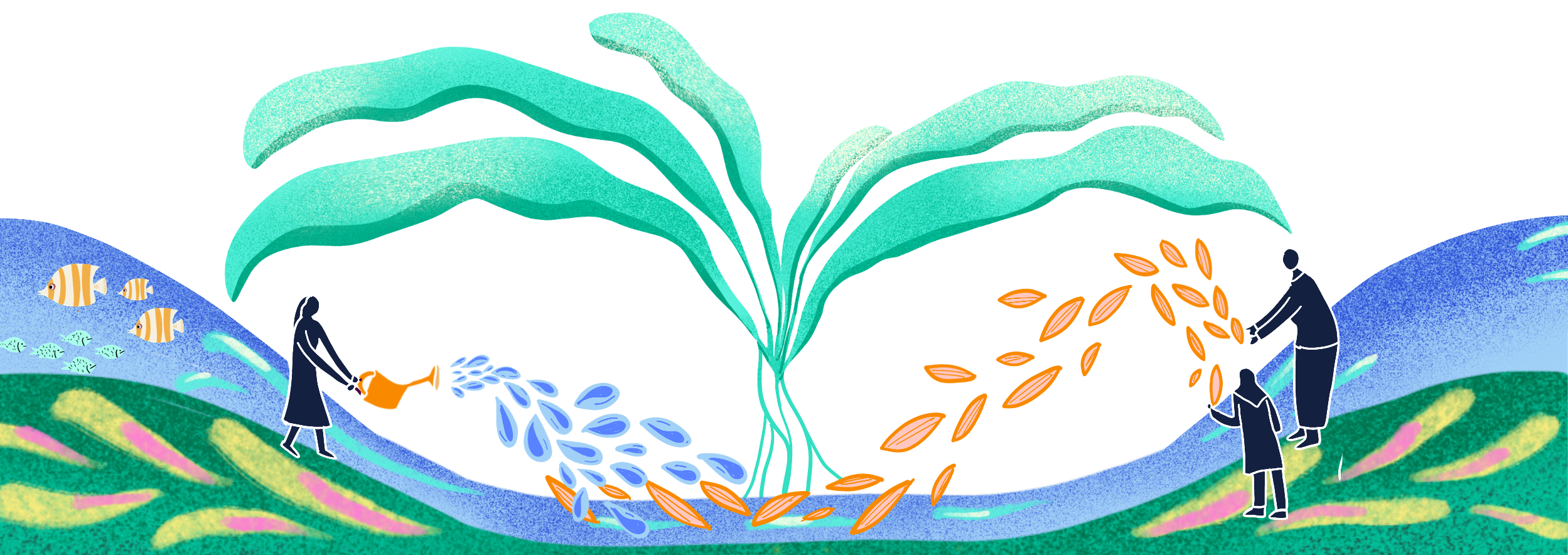
Feminist ecological futures will not arrive on current funding flows.
They need to be nurtured, tended and resourced abundantly
Only 2% of global climate funding reaches feminist organizations — and the share that reaches African feminist organizations, or Indigenous women in rural areas, is a fraction of that. The energy sector is worse, dominated by an appetite for “big,” grid-scale projects that by definition cannot reach the women, Indigenous communities, and rural settlements who most need decentralized solutions.
Mela’s plea was direct: feminist movements have to influence the philanthropic world toward participatory grantmaking, flexible funding delinked from narrow activity lists, and serious resourcing of feminist participatory action research and movement legal work. Arturo’s response was complementary: what actually works is the diversity of small projects added together, not one large one — and where governments will not finance the transition, artists, athletes, and cultural workers can step up. Finance for clean energy is not a single solution, and the configurations are far more plural and doable than dominant institutions admit.
The seeds are already in the soil. The question before us is how we nurture them together.

“My grandmother read the seasons through the moon, knew the rains were coming through the moisture, the heat, the plants in abundance and the plants that were missing. She taught me that the rivers and trees can talk and that the path to the ancestors and to the supreme runs through soil and water.”
“Political imagination will grow not from politicians but from peer-to-peer wisdom, from “radical democracies” practiced daily
We may not have “the answer” but we can develop the practice of building alternatives, learning from them and confronting their contradictions”
“Futures work is in part an act of finding where the future is already living and amplifying it.”