
Crowdsourcing ideas for feminist futures. Using fiction as a visionary and collective tool
With Thays Prado

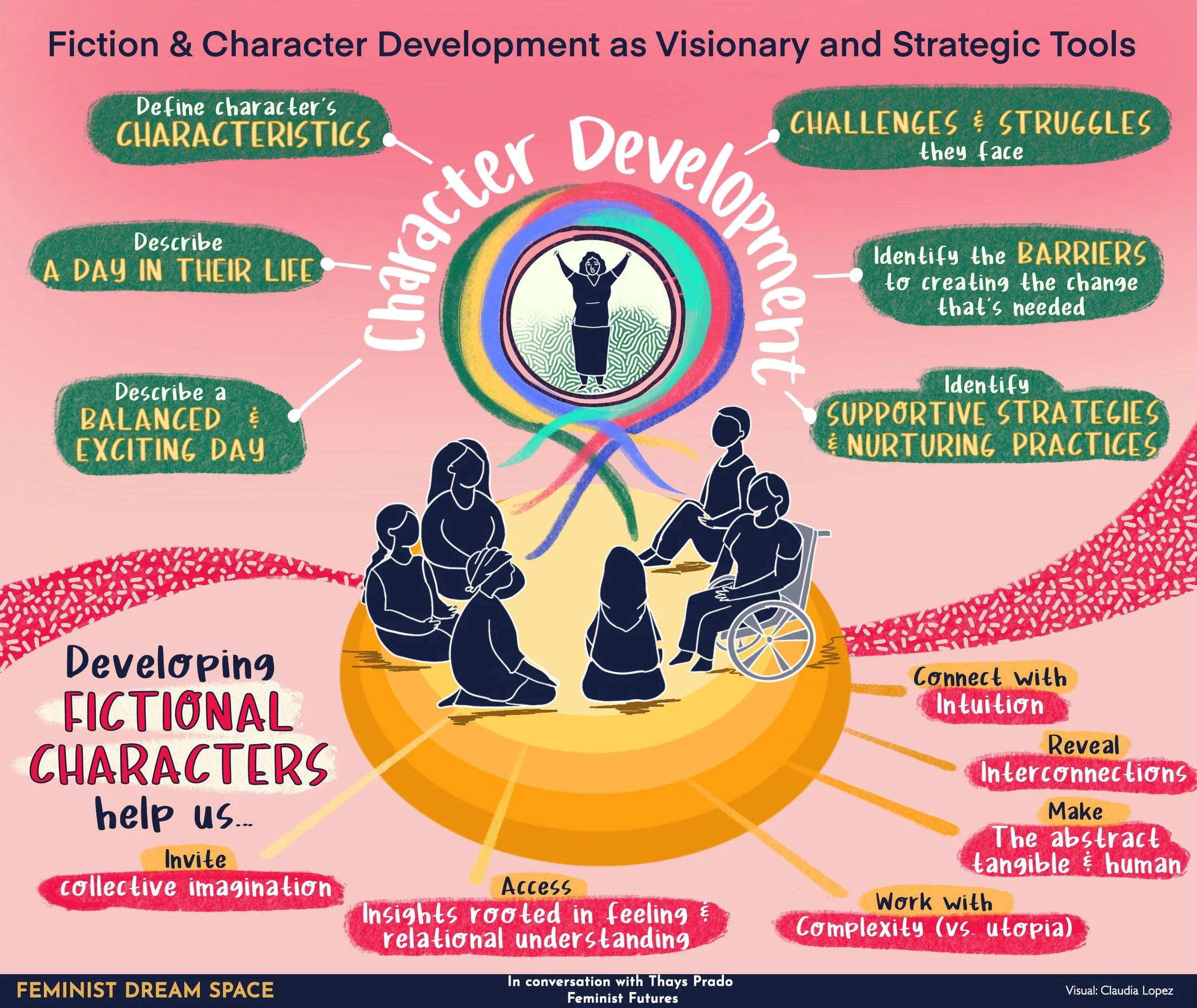
In this workshop conversation with Thays Prado we practiced crowdsourcing ideas for feminist futures using fiction as a tool. We specifically focused on character development to explore what could be.
Developing fictional characters is a futures tool that help us: connect with our intuition, invite collective imagination, reveal interconnections, access insights rooted in feeling and relational understanding (not just logic) and work with complexity, as characters make abstract issues tangible and human.
Fiction and character development is a valuable practice for embodying futures and making them more tangible. By engaging both our analytical and imaginative capacities, we move closer to futures visioning that is not only strategic but deeply human.
Tools:
Insights from our collective exercise of imagining feminist leadership in a time of polycrisis
We explored the imagined life of a feminist leader living and leading in today’s world — a world shaped by overlapping crises and unrelenting demands. Her/their name is Esperanza (Hope).
Here's a glimpse of Esperanza's life:
Esperanza moves through a landscape of care and responsibility — tending to work, family, and community — while navigating the tension between hope and despair. Their leadership is rooted in values of care, yet they are often faced with difficult choices shaped by systemic pressures: funding cuts, limited time, and the weight of collective need.
What sustains her are nurturing and restorative practices that bring her back to herself: reflection and journaling, time in nature, creative expression, gratitude, mindfulness, movement, and being in community — sources of strength, renewal, and connection.
Through this imagining, we also identified the kinds of structures that could make her leadership more possible:

Collective spaces that are generative and restorative

Acknowledgment and appreciation for her leadership and her needs


Communities of practice & learning
Time and spaciousness Leadership structures that allow for this

Flexible, ample funding to support the work and the wellbeing of communities

Intergenerational care, recognizing that this work is shared and inclusive
Insights:
These insights point toward the conditions that help feminist leaders — and movements — thrive even amid the polycrisis. They invite us to move from reactivity to intention, from scarcity to spaciousness, and from isolation to collective care. They remind us that the way we lead can embody the very futures we’re striving to create.
Resources:
Feminist Futures
Stories from the Future -Adolescent girls and young women's vision for a hopeful future from Plan International

“Our own healing and work within is deeply connected to the feminist and liberatory structures, systems and ecosystems we can envision and build”
“We can reclaim and re-root on what we know has worked and also experiment with new alternatives. Practicing and rehearsing ways of being and doing that are in line with our feminist futures visions”